
Visites virtuelles et ressources en réalité virtuelle
Qu'est-ce qu'une visite virtuelle ?
Les visites virtuelles de la Digital Human Library permettent aux élèves d'explorer des lieux réels grâce à des images à 360°, des vidéos et des contenus interactifs. Ces expériences recréent des environnements réels et permettent de visiter des lieux qui seraient autrement inaccessibles. Les visites virtuelles constituent une alternative pratique aux sorties scolaires lorsque le temps, la distance, le coût ou les contraintes logistiques rendent les visites sur place difficiles. Elles peuvent être consultées à tout moment sur n'importe quel appareil et dans n'importe quel navigateur.

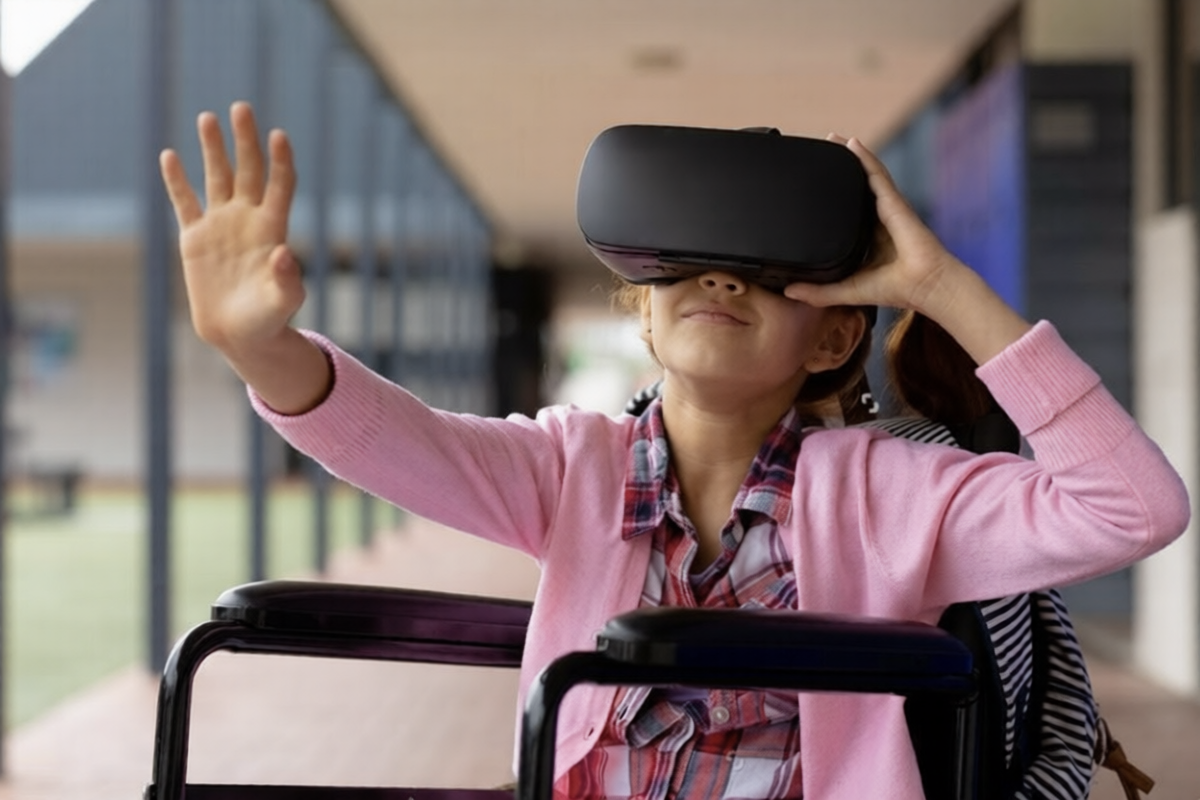
Qu'est-ce que la réalité virtuelle ?
La réalité virtuelle permet aux élèves d'explorer des environnements numériques et d'interagir avec eux, dans une expérience immersive et réaliste. Si un casque peut améliorer l'expérience, les expériences de réalité virtuelle utilisent du contenu à 360° qui peut être visionné sur un ordinateur, une tablette ou un appareil mobile sans casque.
Réalité augmentée, réalité mixte et 360°
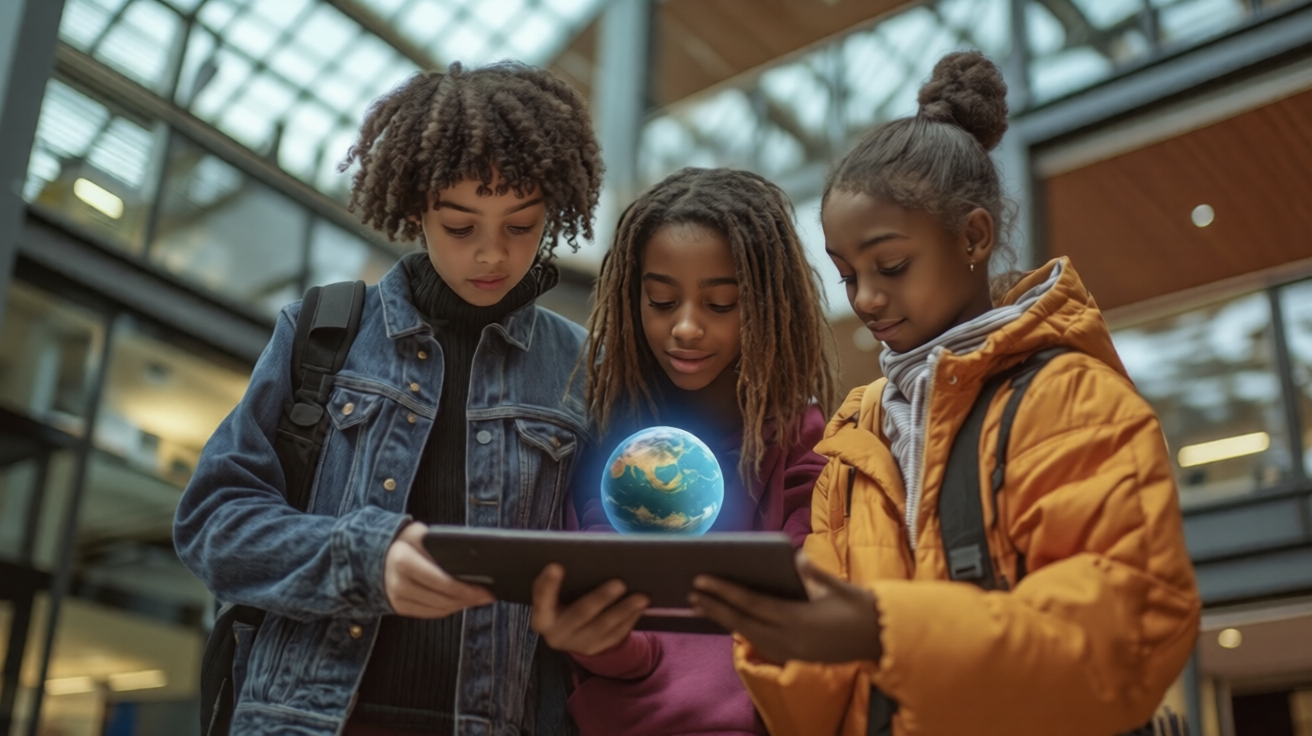
Qu'est-ce que la réalité augmentée ?
La réalité augmentée superpose du contenu numérique, tel que des images, du texte ou des animations, au monde réel.
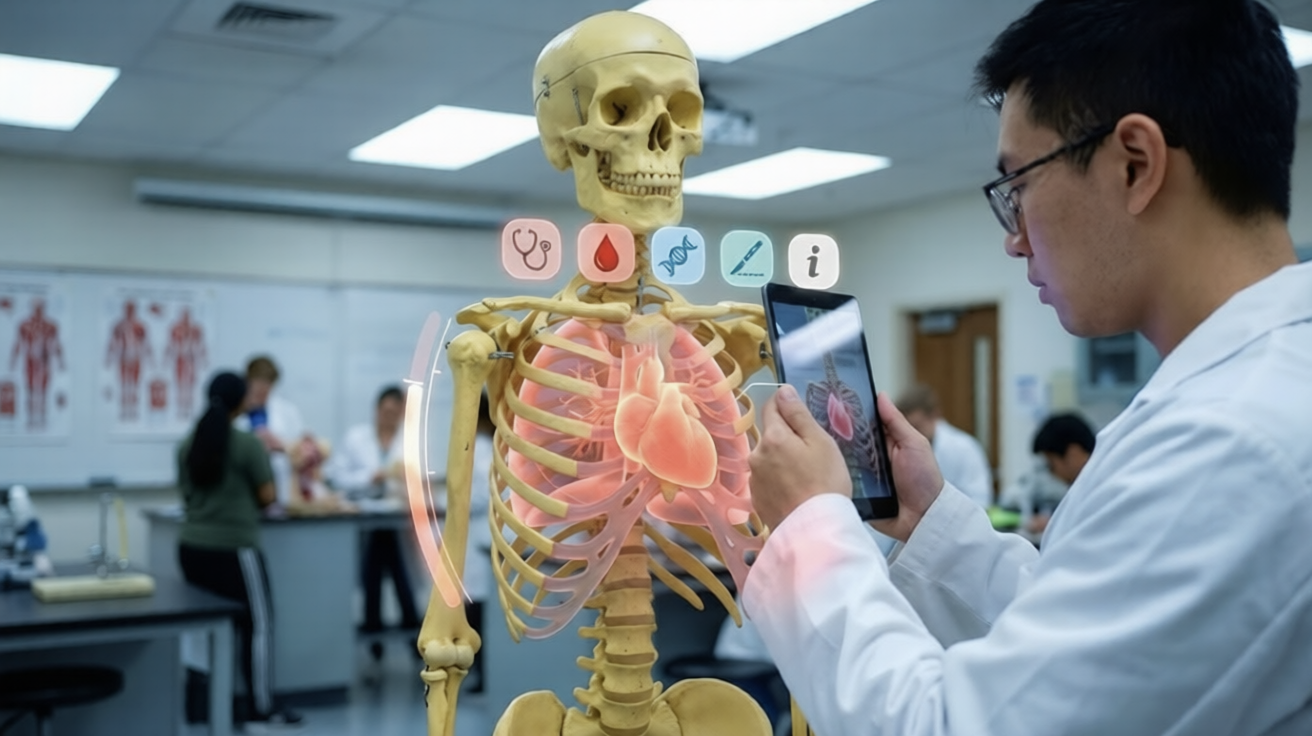
Qu'est-ce que la réalité mixte ?
La réalité mixte fusionne les environnements réels et numériques afin qu'ils interagissent entre eux en temps réel.
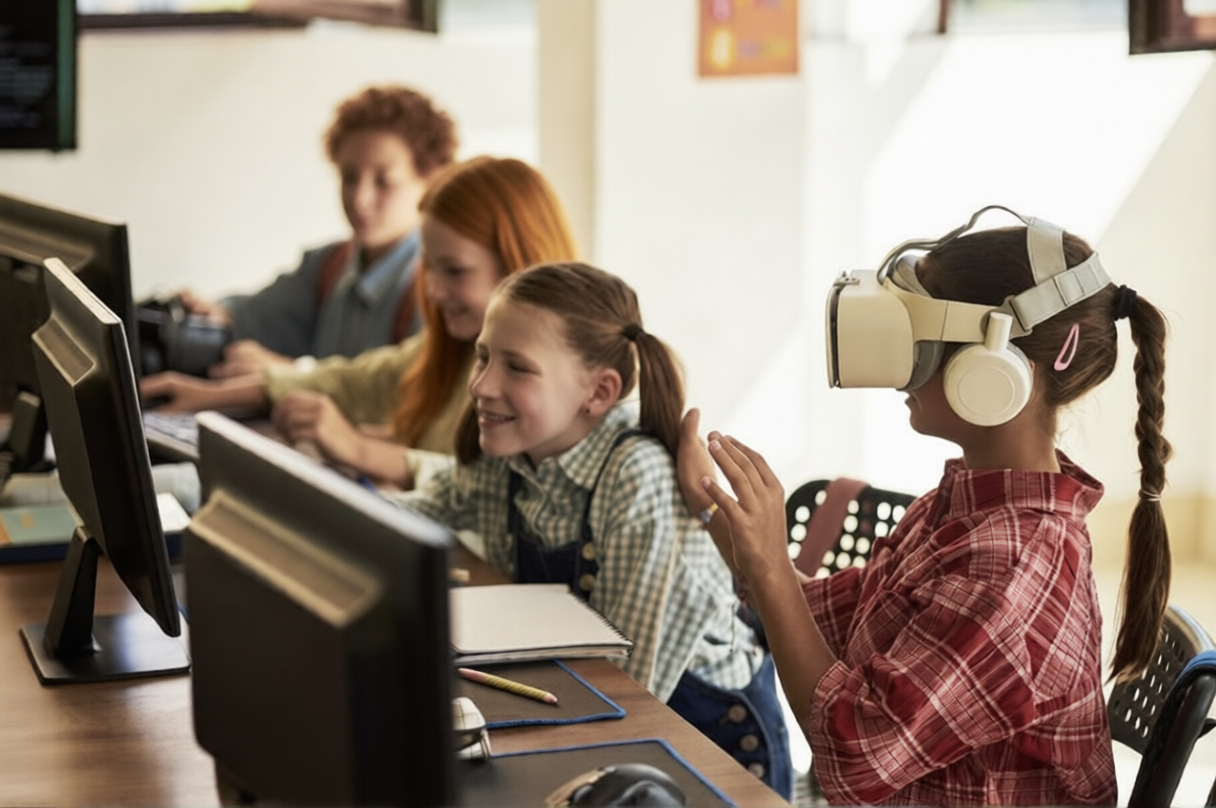
Qu'est-ce qu'une vidéo à 360° ?
Les expériences à 360° utilisent des images panoramiques ou des vidéos qui permettent aux utilisateurs d'observer un espace dans son ensemble sans avoir à s'y déplacer.
Pourquoi recourir aux visites virtuelles et à la réalité virtuelle ?
De plus en plus d'enseignants intègrent les visites virtuelles et la réalité virtuelle (VT/VR) dans leur pratique quotidienne afin de contextualiser l'apprentissage, de renforcer l'implication des élèves et d'approfondir leur compréhension.
Les visites virtuelles et les expériences de réalité virtuelle offrent aux élèves de nouvelles façons d'explorer des idées, des environnements et des points de vue. En plongeant les élèves au cœur de ce qu'ils étudient, qu'il s'agisse d'un univers réel ou imaginaire, les enseignants créent des occasions d'interactions enrichissantes.
Ces expériences favorisent l'apprentissage en créant des moments partagés que les élèves peuvent explorer, remettre en question, sur lesquels ils peuvent réfléchir et qu'ils peuvent relier à de nouvelles idées. Plutôt que de se contenter de lire ou de regarder, les élèves interagissent avec le contenu par l'observation, l'exploration et la discussion, ce qui les aide à assimiler de nouvelles informations en déployant moins d'efforts cognitifs que dans le cadre d'approches plus traditionnelles.
Plusieurs facteurs contribuent à faire de la réalité virtuelle (RV) et de la réalité virtuelle immersive (RVI) un environnement particulièrement propice à la participation et à l'apprentissage. En voici quelques-uns.
Donner du sens à l'apprentissage
Les visites virtuelles et la réalité virtuelle plongent les élèves au cœur des environnements liés à leur apprentissage. Plutôt que de découvrir des concepts uniquement par le biais de descriptions, les élèves peuvent observer, explorer et interagir avec les lieux, les systèmes et les phénomènes qu’ils étudient. Ce changement — passer de la lecture à l’expérience directe — transforme la manière dont les élèves appréhendent les nouvelles informations.
Susciter et entretenir la curiosité intellectuelle
La réflexion commence par quelque chose qui mérite notre attention. Lorsque les élèves explorent des environnements riches et détaillés, ils découvrent naturellement des éléments qui suscitent des questions. Les expériences virtuelles offrent aux apprenants des éléments concrets à observer et à étudier, ce qui facilite l'émergence de questions pertinentes et permet à la curiosité de déboucher sur des pistes de réflexion plus approfondies.
Soutenir l'exploration active
L'apprentissage par l'expérience, c'est apprendre en faisant. Les environnements virtuels offrent aux élèves la possibilité d'explorer, d'observer et d'interagir avec des concepts d'une manière difficile à reproduire uniquement à travers des textes. Les élèves progressent à leur propre rythme dans ces expériences, en décidant eux-mêmes où porter leur regard et ce qu'ils souhaitent approfondir, ce qui fait d'eux des participants actifs à leur propre apprentissage plutôt que de simples récepteurs passifs.
Améliorer la compréhension et la mémorisation
Les recherches en sciences cognitives montrent que l'implication et le lien émotionnel sont des facteurs clés dans la capacité des élèves à retenir de nouvelles connaissances. Les expériences immersives stimulent l'attention et la concentration d'une manière que les formats plus passifs ne permettent pas. Lorsque les élèves s'investissent véritablement dans ce qu'ils explorent, ils sont plus enclins à établir des liens et à conserver ces nouvelles connaissances au fil du temps.
Apprendre de manière visuelle
Les études montrent systématiquement que la majorité des apprenants assimilent et retiennent mieux les informations par le biais de supports visuels. Les visites virtuelles et la réalité virtuelle transforment des contenus abstraits ou complexes en expériences observables et interactives. Elles s’avèrent particulièrement efficaces pour aider les élèves à appréhender des systèmes scientifiques, des environnements géographiques, des contextes culturels et historiques, ainsi que des structures ou des processus difficiles à transmettre par le biais de textes ou d’images statiques.
Personnaliser l'apprentissage
Les visites virtuelles et la réalité virtuelle favorisent un enseignement différencié de manière concrète. Les élèves peuvent explorer en fonction de leurs centres d’intérêt, avancer à leur propre rythme et revivre des expériences autant de fois que nécessaire. Les enseignants peuvent sélectionner et organiser des expériences adaptées aux différents besoins d’apprentissage, points forts et niveaux de préparation des élèves, sans avoir besoin de matériel supplémentaire ni d’une préparation importante.
Soutien aux liens avec les programmes scolaires
Les visites virtuelles et la réalité virtuelle ne sont pas de simples compléments pédagogiques : ce sont des outils didactiques qui correspondent directement aux attentes du programme scolaire, toutes matières et tous niveaux confondus. Que vous enseigniez la géographie, les sciences, l’histoire, les arts ou l’orientation professionnelle, il existe des expériences en lien direct avec ce que vous êtes déjà tenu d’enseigner. Pour les enseignants confrontés à des emplois du temps chargés et tenus de respecter le programme scolaire, cette adéquation est essentielle.
Élargir l'accès aux expériences d'apprentissage
Le coût, la distance et les contraintes logistiques rendent de nombreuses expériences pédagogiques enrichissantes inaccessibles à la plupart des classes. Les visites virtuelles et la réalité virtuelle changent la donne. Les élèves peuvent visiter des musées, des sites culturels et des espaces naturels ; découvrir des secteurs d’activité et des lieux de travail ; et vivre des expériences qui, sans cela, n’auraient jamais leur place dans une journée d’école. L’égalité d’accès est essentielle, et ces outils contribuent à combler ce fossé.
Favoriser la compréhension interculturelle et la réconciliation
Les visites virtuelles et la réalité virtuelle permettent aux élèves de découvrir des cultures, des communautés et des points de vue qui dépassent le cadre de leur expérience immédiate. Pour les éducateurs canadiens chargés de soutenir la réconciliation avec les peuples autochtones, ainsi que pour tous les enseignants qui s’efforcent de créer des classes plus inclusives, ces expériences immersives constituent un moyen efficace de développer l’empathie, d’élargir la vision du monde et de mettre en valeur des voix et des lieux qui ont historiquement été absents des programmes scolaires.
Accompagner des apprenants issus de la diversité
Les expériences visuelles immersives allègent les exigences linguistiques susceptibles de constituer des obstacles pour les apprenants d’anglais et les élèves qui rencontrent des difficultés face à des contenus comportant beaucoup de texte. S’appuyant sur les principes de la conception universelle de l’apprentissage, les visites virtuelles et la réalité virtuelle offrent de multiples moyens de représentation et d’implication, permettant ainsi à davantage d’élèves d’accéder véritablement au programme scolaire.
Motiver les élèves réticents
Certains élèves qui se désintéressent de l'enseignement traditionnel réagissent de manière très différente aux formats expérientiels. Les recherches sur la motivation soulignent systématiquement que l'autonomie, la pertinence et la nouveauté sont des facteurs clés de l'engagement — autant d'éléments que les visites virtuelles et la réalité virtuelle permettent d'offrir. Pour les enseignants qui cherchent des moyens de toucher les élèves qui se sont désintéressés, les expériences immersives peuvent constituer un point de retour significatif.
Renforcer la confiance en soi par l'exploration
Les élèves qui hésitent à prendre des risques dans leur apprentissage ont souvent besoin d’occasions de s’essayer à de nouvelles choses dans un contexte moins contraignant. Les expériences virtuelles leur permettent d’aborder de manière autonome des contenus qui leur sont inconnus, de revenir sur ce qu’ils ont déjà exploré et de se familiariser avec ces contenus avant de devoir réaliser une tâche ou produire quelque chose. Pour les élèves qui ressentent de l’anxiété face à de nouvelles situations d’apprentissage, ce type d’exploration accompagnée peut faire une réelle différence.
Encourager la pensée créative
Le fait d'être confrontés à de nouveaux environnements et à de nouvelles perspectives offre aux élèves une source d'inspiration riche pour réfléchir et créer. Les expériences virtuelles peuvent constituer un point de départ fructueux pour la narration, la conception, la résolution de problèmes et l'exploration créative, permettant ainsi d'étendre l'apprentissage au-delà de la simple consommation de contenus pour aller vers leur création.
Développer ses compétences en matière de culture numérique
La navigation dans des environnements virtuels constitue en soi une expérience de culture numérique. Les élèves acquièrent ainsi des compétences pour évaluer les contenus numériques, évoluer de manière ciblée dans des environnements riches en informations et porter un regard critique sur ce qu’ils observent. Alors que la réalité virtuelle et les médias immersifs occupent une place de plus en plus importante dans la vie professionnelle et civique, il est à la fois pertinent et tourné vers l’avenir d’offrir aux élèves une expérience guidée de ces outils dans un contexte éducatif.
Faire le lien entre l'apprentissage et le monde réel
L'un des défis récurrents dans le domaine de l'éducation consiste à aider les élèves à prendre conscience de la pertinence de ce qu'ils apprennent. Les visites virtuelles et la réalité virtuelle permettent de rendre ces liens visibles en faisant entrer dans la salle de classe des lieux de travail, des environnements, des secteurs d'activité et des communautés réels. Les élèves ne se contentent pas d'étudier le monde : ils y jettent un véritable regard. Ce lien entre le programme scolaire et le contexte du monde réel est l'un des atouts les plus puissants qu'un enseignant puisse offrir.
Visites virtuelles et réalité virtuelle en classe
Les visites virtuelles et les expériences de réalité virtuelle offrent une grande souplesse et peuvent être utilisées de multiples façons, notamment :
- avant d'apprendre à présenter un sujet, un objectif d'apprentissage ou à donner le contexte
- au cours de l'apprentissage, afin de favoriser la réflexion et la discussion
- après avoir appris à réexaminer certaines idées et à approfondir sa compréhension
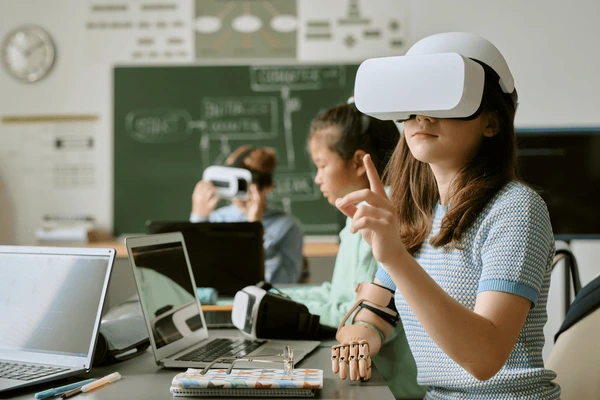
Tâches d'évaluation et d'appréciation
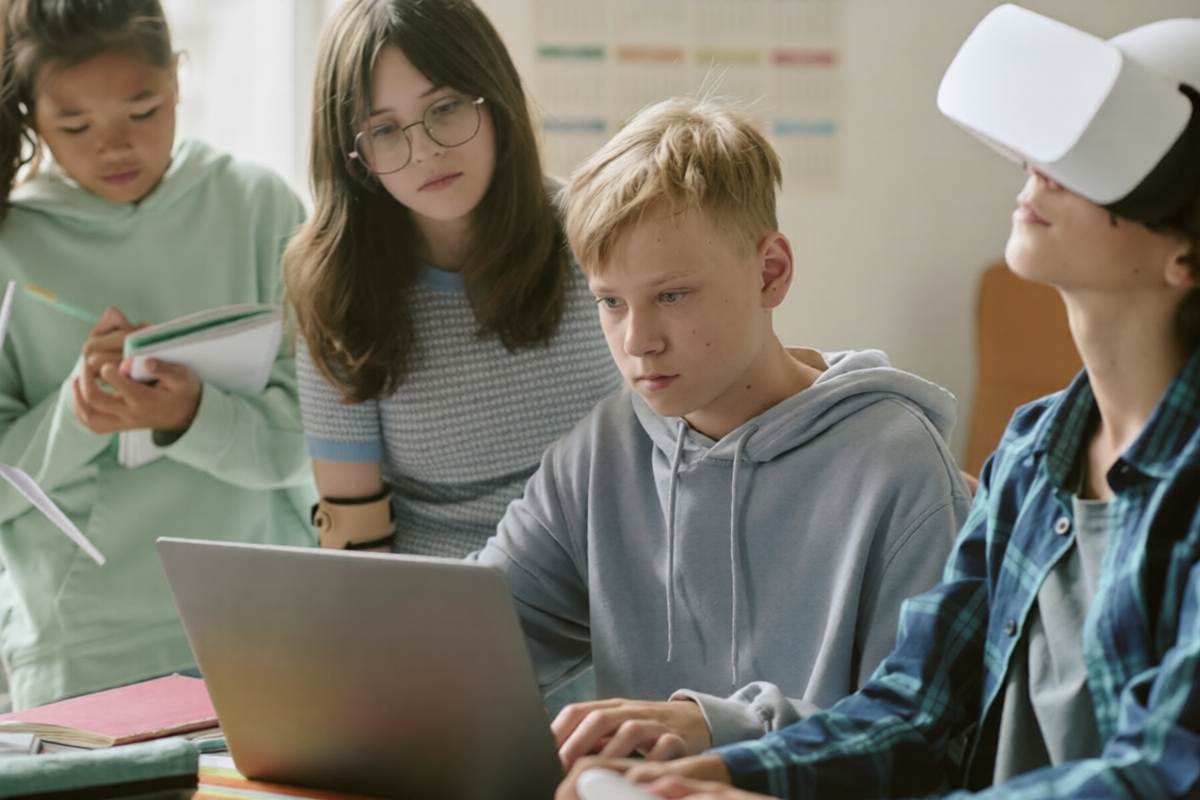
L'intégration de visites virtuelles et de la réalité virtuelle dans votre classe offre la possibilité d'évaluer les acquis. Les activités ci-dessous sont organisées en fonction de chacune des raisons évoquées ci-dessus, ce qui vous permet d'établir un lien direct entre vos objectifs pédagogiques et vos pratiques d'évaluation.
Les expériences virtuelles constituent de riches sources d'informations. À mesure que les élèves explorent, les enseignants peuvent recueillir des données formatives par l'observation et la conversation — en notant ce sur quoi les élèves concentrent leur attention, les questions qu'ils posent et les liens qu'ils établissent. Les productions des élèves — écrites, orales ou créatives — fournissent des indications supplémentaires sur la manière dont l'apprentissage évolue au fil du temps.
Les exercices proposés ici permettent d'évaluer l'apprentissage, tant dans son déroulement que dans ses résultats. Certains sont conçus pour vous aider à cerner le niveau de départ des élèves. D'autres demandent aux élèves de montrer ce qu'ils savent et de mettre leurs connaissances en pratique. D'autres encore invitent les élèves à réfléchir à leur propre parcours d'apprentissage. Utilisés conjointement, ils vous donnent une vision complète de l'apprentissage des élèves.
Download Assessment & Evaluation Tasks
Évaluer une visite virtuelle
L'évaluation d'une visite virtuelle ou d'une expérience de réalité virtuelle constitue la suite logique après l'avoir explorée. Lorsque les élèves analysent ce qu'ils viennent de vivre — ce qui a fonctionné, ce qui n'a pas fonctionné et pourquoi —, ils développent l'esprit critique dont ils ont besoin pour aborder les contenus numériques de manière réfléchie. Le fait de suivre un processus d’évaluation aide les élèves à porter un regard critique sur la conception, l’objectif et la qualité — non seulement en tant qu’utilisateurs de la technologie, mais aussi en tant que futurs créateurs de celle-ci. Cette prise de conscience critique est exactement ce dont ils ont besoin pour commencer à créer leurs propres visites virtuelles.
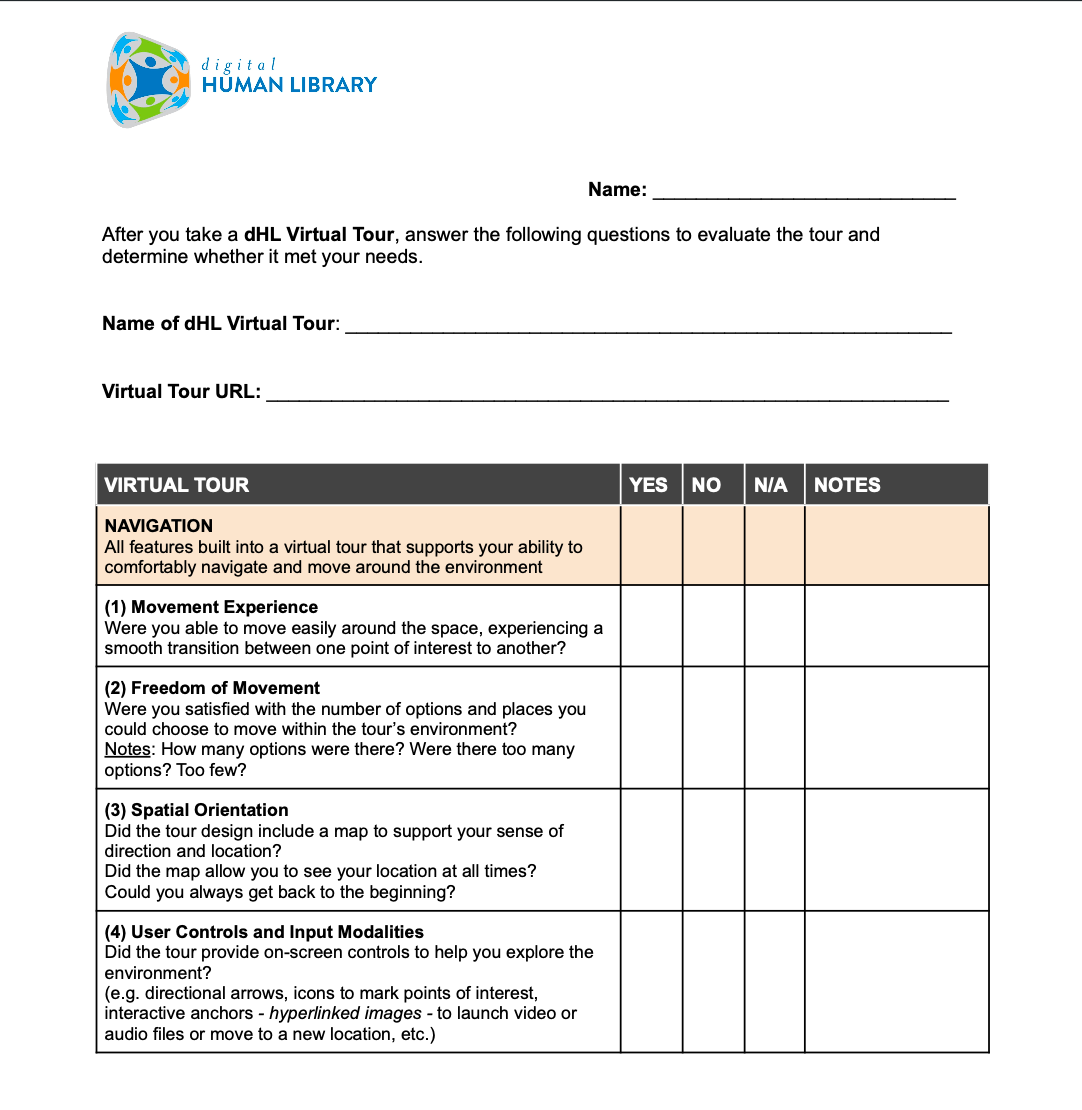
Télécharger « Évaluer une visite virtuelle »
Rejoignez-nous
Commencez à bâtir un apprentissage significatif et connecté avec la Bibliothèque Humaine Numérique dès aujourd'hui !
Les enseignants individuels peuvent s'inscrire directement sur notre site Web. Les écoles et les districts sont invités à Nous contacter pour en savoir plus.